At the core of this methodology is a belief that art belongs to everyday life: a way to understand what drives us and make meaning from the lives we live. My work is shaped by the place and circumstances it is made in, and explores themes of motherhood, wild spaces, water and care. The methodology is a cyclical process of making, understanding, sharing and building with others.
Process 01 | Western Australia | 2011–2013
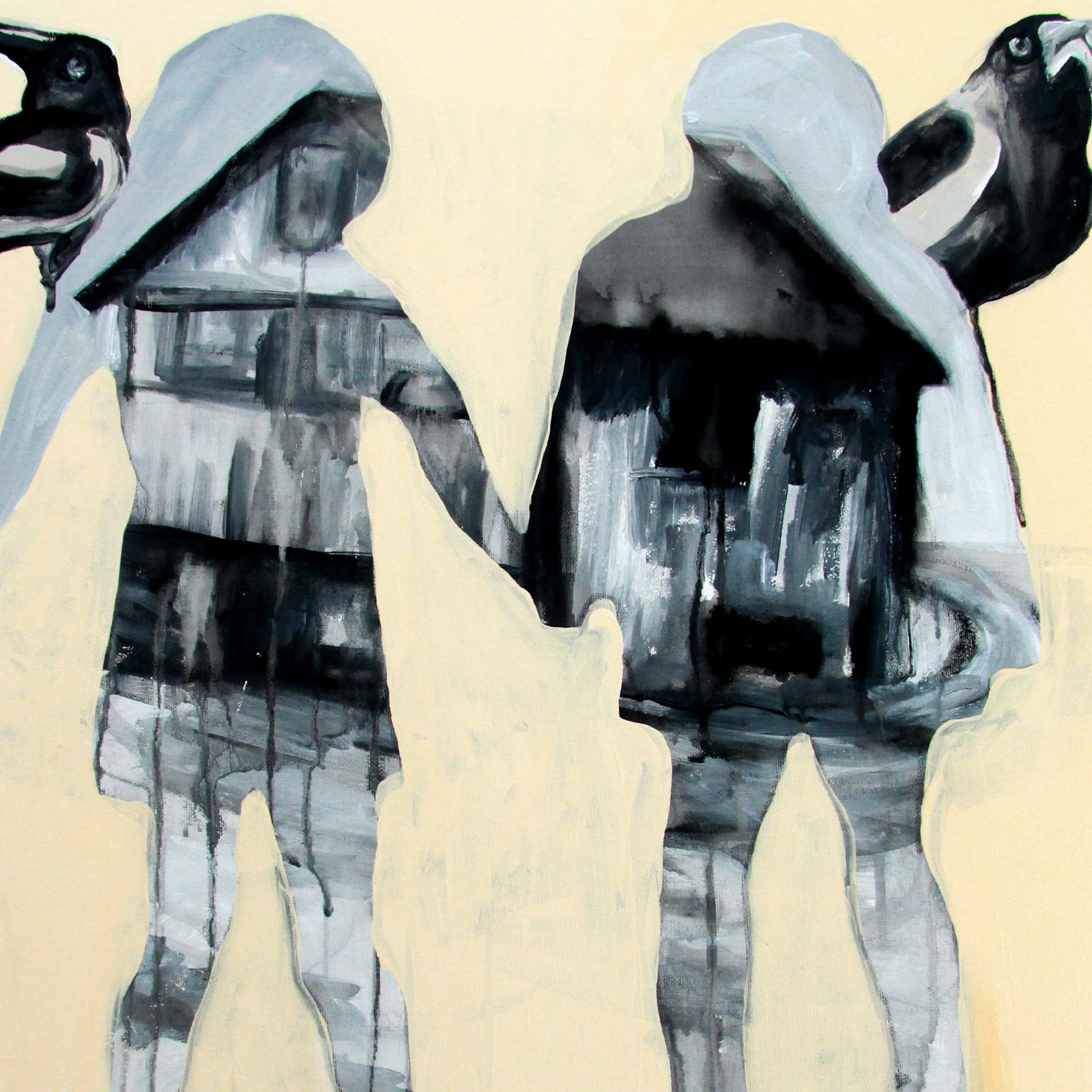
A move to Western Australia with my husband and two young children gave me time and space to develop a fresh art practice, following a decade of full-time work as an artist educator. I followed the advice I had given to many students and recorded what I saw with what I had. I trusted in the creative process, making art alongside my children and within international mothers’ groups, and discovered that the images I created held meaning beyond myself. I developed a narrative storyworld where children followed the birds, escaped their urban lives and returned in a ‘feral state’.
Process 02 | Feral Girl | 2013–2015
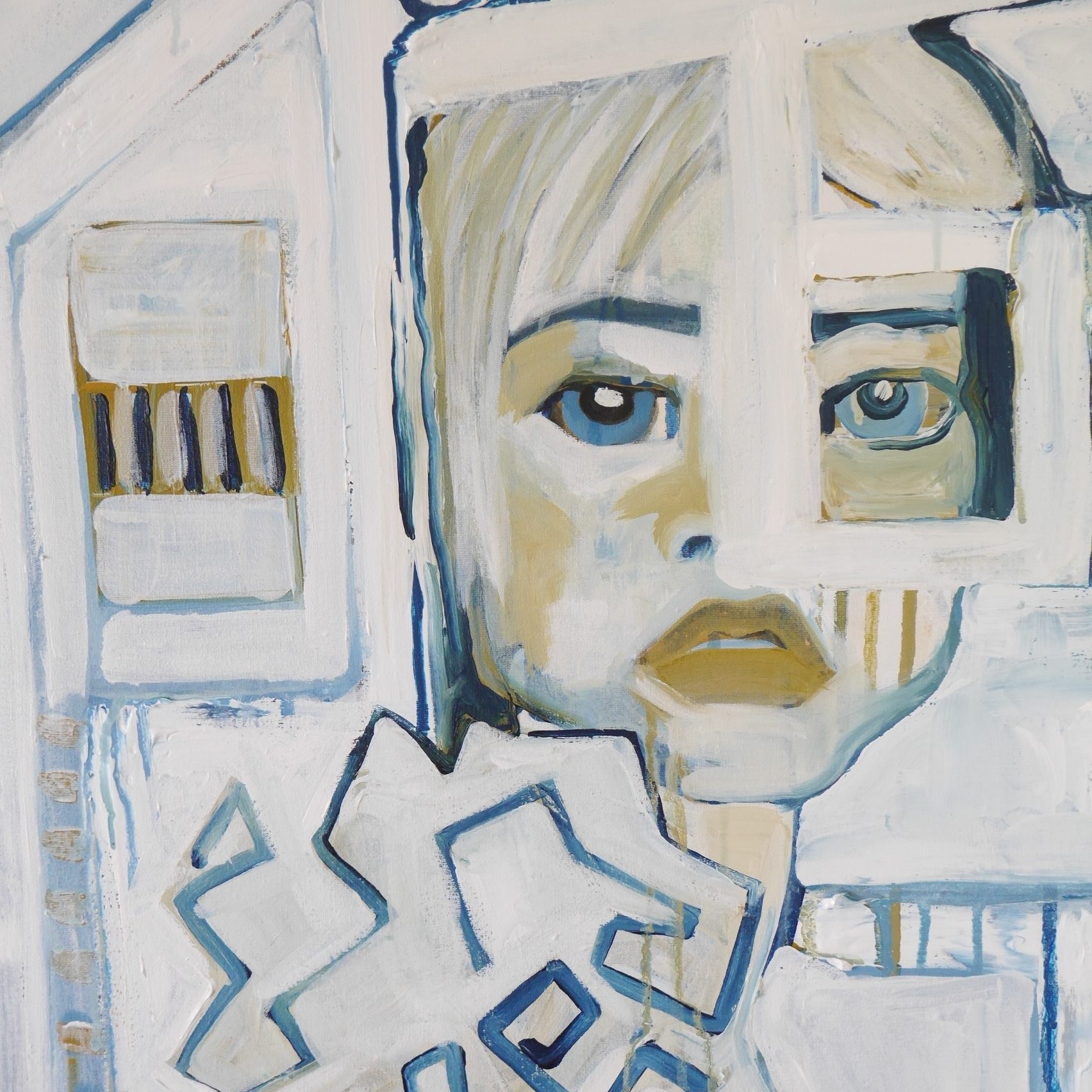
I returned to the UK and painted in the gaps while a new baby fed and slept. Without the Western Australian landscape as inspiration, I worked from collages cut from magazines. The paintings were portraits of otherworldly women and wild animals who inhabited the ‘feral state’. I exhibited my work in local cafés and a network of creatives grew around it. My desire to build meaning around my work led to conversations with participatory arts organisations in Stoke-on-Trent, and access to overlooked land in the city became possible.
Process 03 | Feral Spaces | 2016–2019
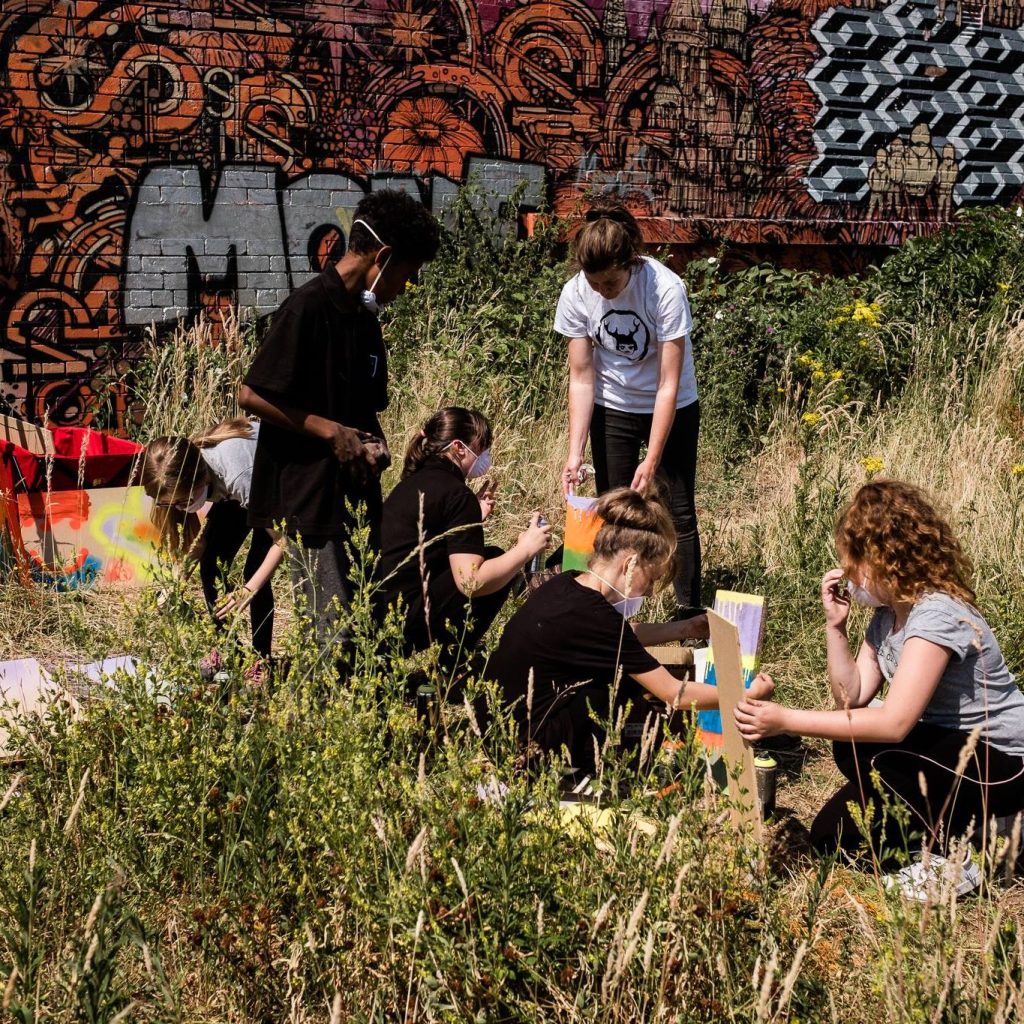
I brought my ‘Feral State’ narrative to life on rewilded brownfield land in Stoke-on-Trent. I ran creative workshops and community events that explored the benefits of wild spaces for young people, and built a community of artists, families, educators, academics and funders. A co-created body of knowledge reached places neither art nor academic research could reach alone and the work grew into Urban Wilderness CIC, co-founded with Isla Telford and Jenny Harper. The organisation followed the needs of people and place into large-scale events and culture-led regeneration across the region while my own practice stayed in the wild.
Process 04 | Entanglement | 2020–2023
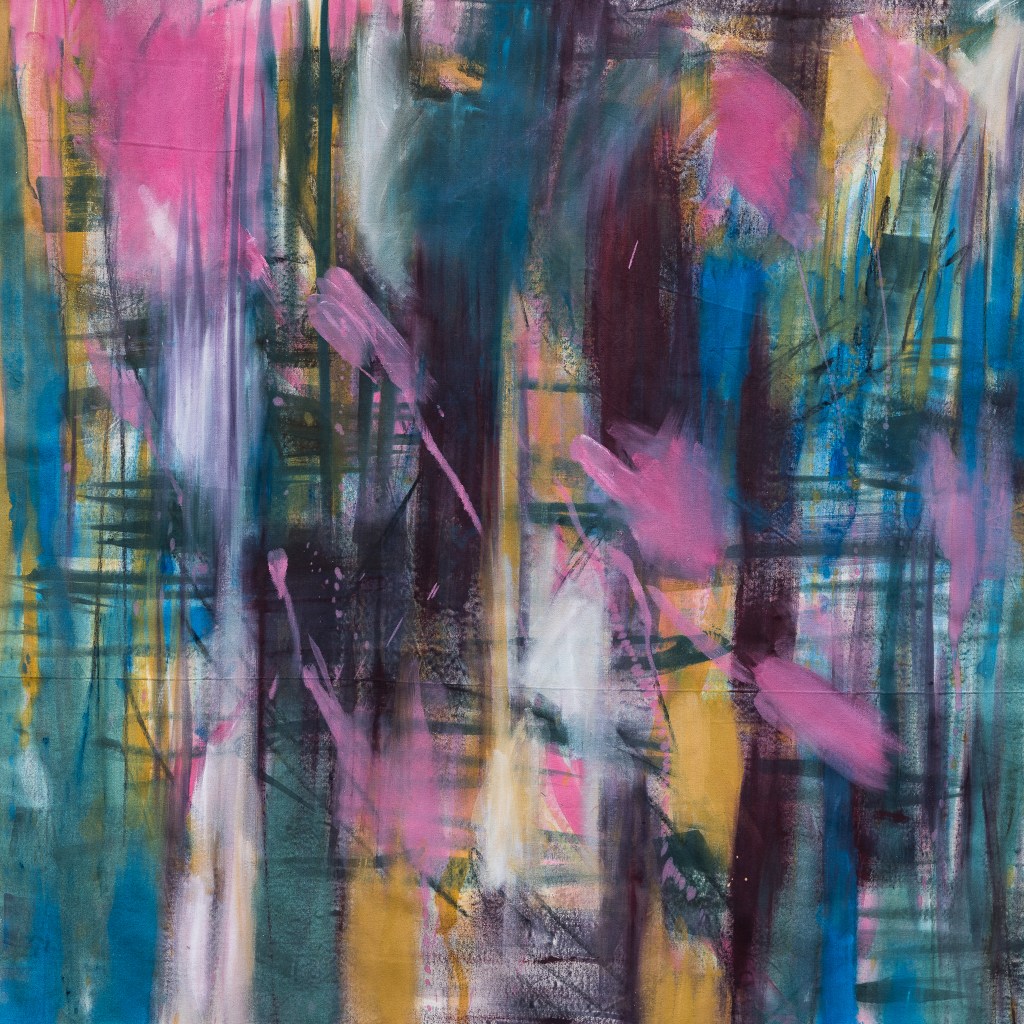
I started cold water swimming during lockdown and recognised the creative clarity it brought. I began a process of immediate mark making with oil bars on canvas after immersion, then large-scale paintings that repeated my body’s reaction to cold water through breath and gesture. Swimming with other women produced shared liminal states of vulnerability, endurance and attention. Those moments began to reach beyond the personal and into a collaborative inquiry.
Process 05 | The Norns Collective | 2022–2023
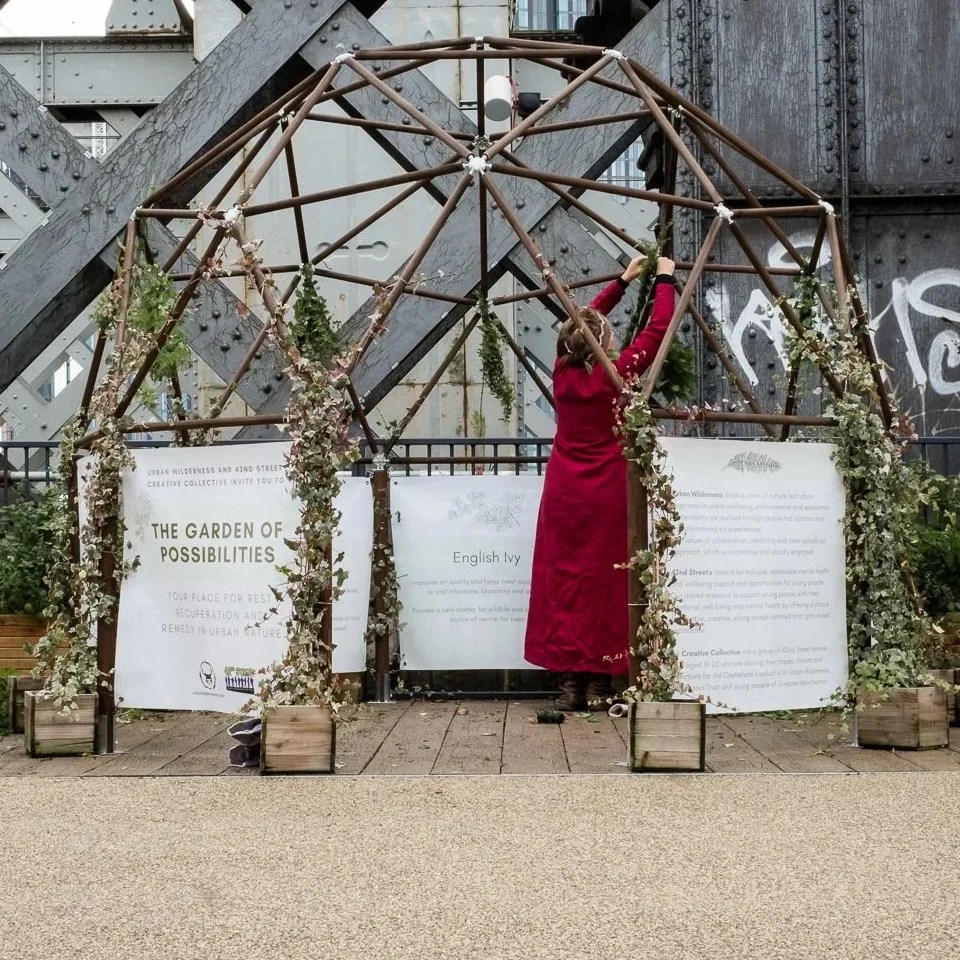
A cold water swimming residency in North Wales with Isla Telford and Jenny Harper became the inspiration for a series of durational performances. We took turns to rest while the others kept watch. One performance took place on Manchester’s Castlefield Viaduct, in silence and without explanation. It showed me that care is political, that rest in public is a radical proposition, and that female attention can transform a space without saying a word.
Then a period of acute family crisis moved me into full-time care, and I left Urban Wilderness. I lost collaborators, shared momentum and a collectively held way of working. The practice returned to place and personal reflection.
Process 06 | Craft as Care | 2024–Ongoing
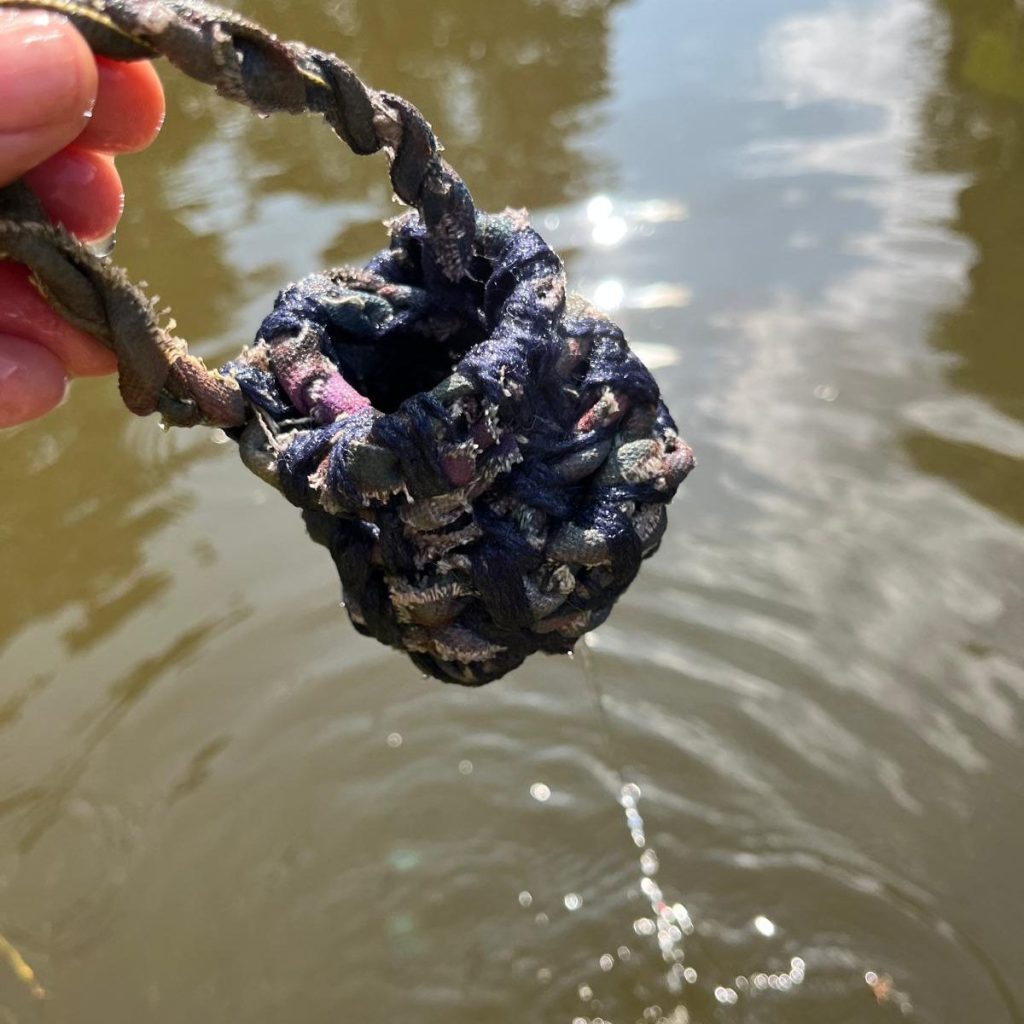
Alongside my wild swimming, I began working with fabric as a collaborator, soaking it in rivers, oceans and lakes and forming it by hand into three-dimensional structures. The material held, responded and returned something in place of what people had once given the practice. Over time this became a ritual of grounding during intense caring responsibility, and the time given to developing craft skills became a form of care in itself. The ritual is now extending outward through workshops with parent carers.
Process 07 | Body, fabric, water | 2026–Ongoing
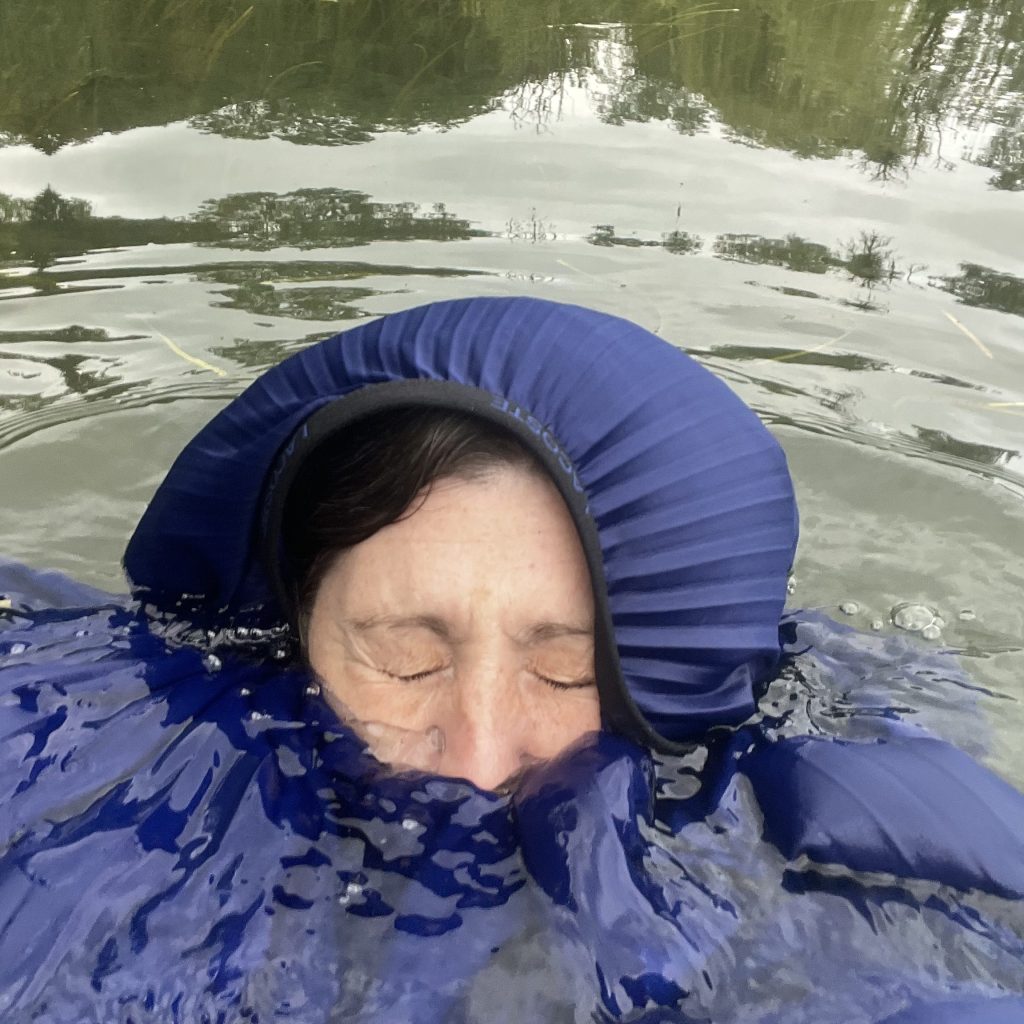
I enter Staffordshire lakes and rivers with fabric and a camera phone, falling or sinking backward into the water again and again. Nothing is choreographed: the cold, the breath and the weight of wet cloth decide what happens. Over repeated immersions I relinquish control, and the camera records moments my own eyes cannot see. Afterwards I search the footage for the image that tells me something. In these self-portraits I become one of the materials, shaped, held and marked by the water and everything living in it.
This work is now leading to academic collaboration around wild swimming, women and film. If your work touches on water, care, craft or access to wild spaces, I’d welcome a conversation.

